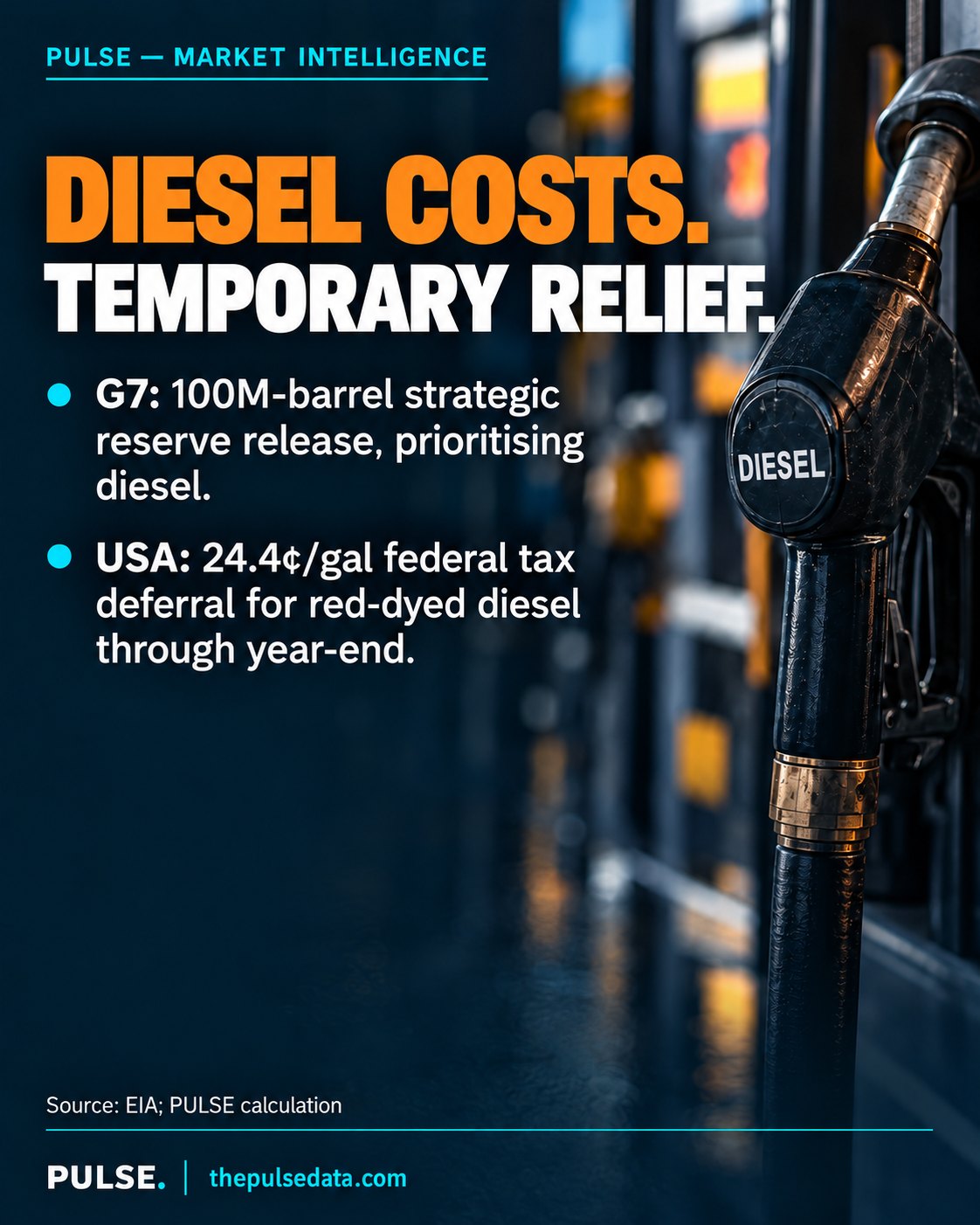
Policy measures are providing temporary relief
Governments are responding to diesel-market pressure with measures intended to soften the immediate cost impact.
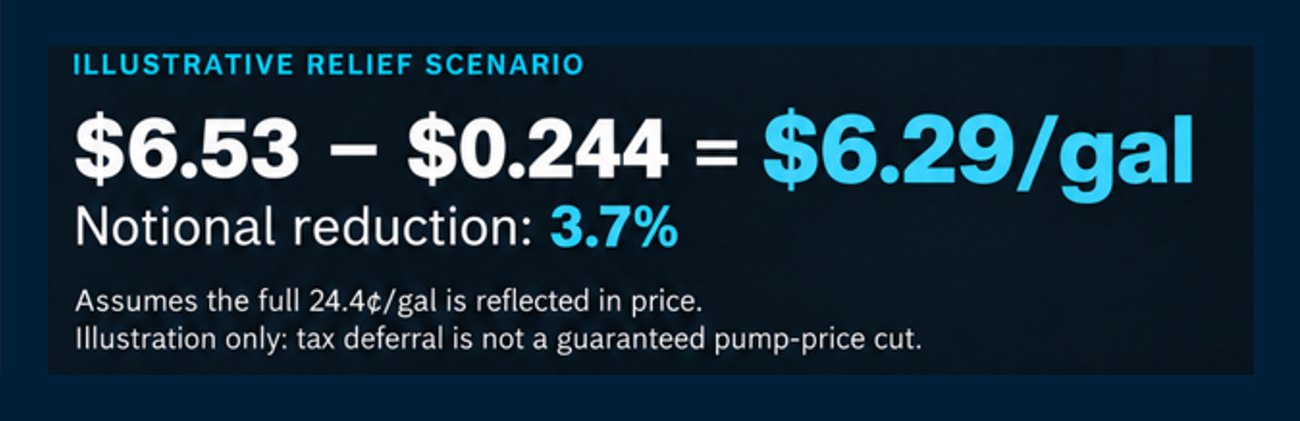
The G7 has announced the release of approximately 100 million barrels from strategic reserves over four months, with diesel supply receiving particular attention. In the United States, temporary relief of 24.4 cents per gallon has also been announced for qualifying red-dyed diesel through the end of 2026.
These measures matter. They can increase available supply, reduce short-term price pressure and give businesses some temporary protection from recent market volatility.
However, neither measure fundamentally increases global refining capacity or permanently replaces constrained export supply. Businesses preparing 2027 budgets should therefore be careful not to treat the full short-term benefit as a lasting reduction in diesel costs.
The underlying supply picture remains tight
Three factors continue to shape the outlook.
1. Lower Russian export availability
Russia remains an important supplier of diesel and related products to the international market. Reduced export availability—whether caused by refinery disruption, sanctions, domestic requirements or export controls—removes supply from an already interconnected market.
The impact is not limited to countries buying Russian fuel directly. When one major source becomes less available, buyers compete for replacement supply elsewhere, affecting prices and trade flows across Europe, the Middle East, Asia and the Atlantic Basin.
2. Disruption in the Middle East
Middle Eastern refineries are an increasingly important source of diesel for international buyers. Disruption to production or shipping routes can therefore have an immediate effect on delivered costs.
Even where physical supply remains available, higher freight rates, longer voyages and additional insurance or security costs can feed through to the final price. Europe is particularly sensitive because it relies on imported diesel to balance its regional supply requirements.
3. Greater pressure on US supply
The United States has become an increasingly important exporter of refined products. Higher exports support buyers in other regions, but they also reduce the volume available to the domestic US market and can add upward pressure to American prices.
This creates an important connection between US and European risk. Europe benefits from access to US supply, while the US market becomes more exposed to strong export demand.
Any future restriction on US refined-product exports would therefore have two different effects: it could improve domestic US availability, but it would deepen Europe’s diesel supply squeeze by removing an important alternative source.
One global assumption is unlikely to be sufficient
Diesel-price movements are not uniform between countries.
Taxes, subsidies, exchange rates, domestic refining capacity, import dependency and government intervention all affect the price ultimately paid in each market. A global oil-price assumption alone will therefore not fully explain the diesel-cost exposure of plants operating in different locations.
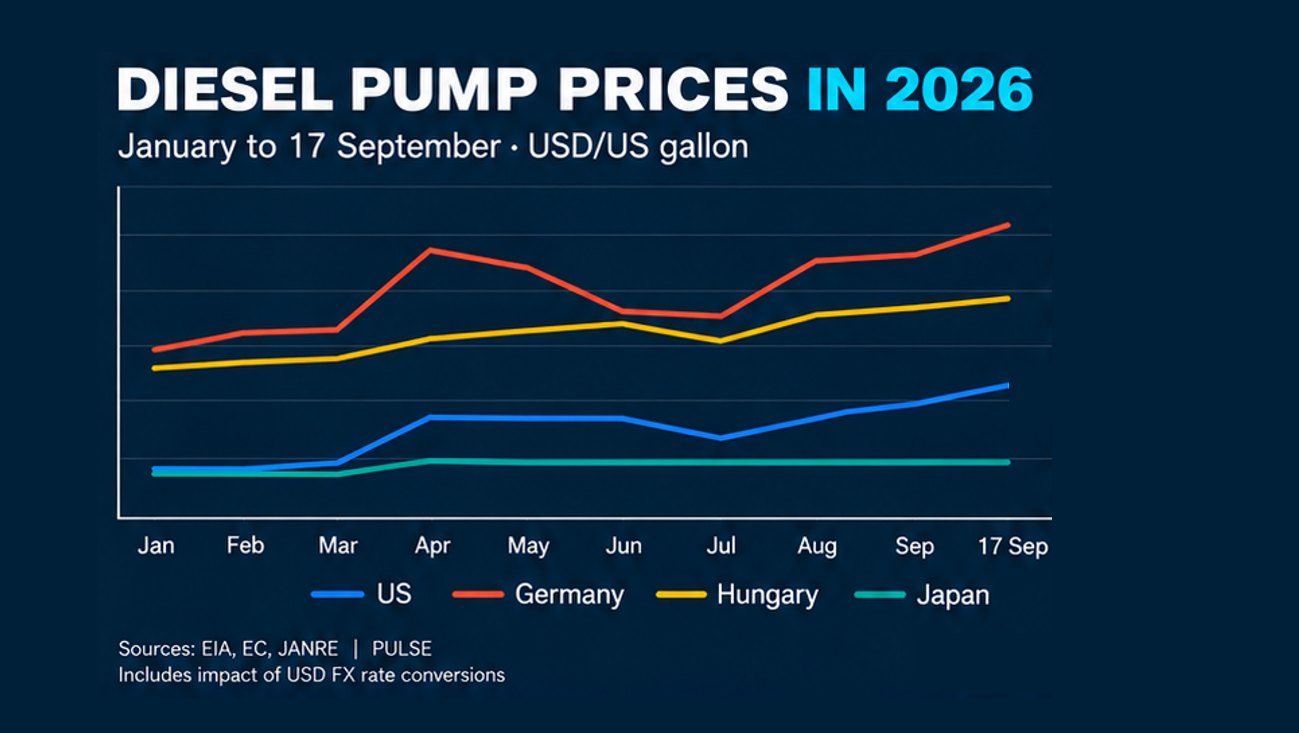
The comparison should distinguish between:
- markets where international price movements pass through relatively quickly;
- markets where taxes or exchange rates amplify the change;
- markets where subsidies or government intervention reduce short-term volatility;
- import-dependent markets with greater exposure to shipping and supply disruption.
For procurement and budgeting teams, the relevant question is not simply whether diesel prices will rise or fall. It is how the same international event will affect each production location—and how quickly that impact will become visible.
A scenario-based approach to 2027
Rather than relying on one central diesel-price forecast, businesses should consider at least three planning cases:
Base case
Temporary policy support expires broadly as expected, while global supply remains available and major disruptions are avoided.
Relief case
Reserve releases, improved refinery availability and weaker demand provide greater or longer-lasting relief than currently anticipated.
Supply-pressure case
Further disruption affects Russian, Middle Eastern or other export supply, while strong demand increases competition for available US and international volumes.
The objective is not to predict one exact price. It is to establish a defensible range and understand which facilities, products and budgets are most sensitive to movement within that range.
The budgeting question
Temporary relief can legitimately be reflected in short-term forecasts. The more difficult decision is how much of it should be carried into 2027 assumptions.
If temporary measures are incorporated as though they represented a structural improvement, budgets may understate future costs. If they are ignored entirely, near-term expenditure may be overstated.
The appropriate assumption will depend on the market, the type of diesel consumed, policy eligibility and the timing of purchasing contracts. It should also be reviewed as the expiry of temporary measures approaches.
PULSE tracks fuel-price developments across multiple production markets, alongside raw materials, labour, energy, batteries and logistics. This provides a consistent basis for comparing regional cost exposure and testing alternative planning assumptions.
About the data
Diesel-price comparisons are based on published national and regional sources, including the US Energy Information Administration, the European Commission and Japan’s Agency for Natural Resources and Energy. Currency conversions are applied consistently to support international comparison.
Data shown are the latest available at the stated cut-off date. Price movements and illustrative scenarios do not constitute a forecast or purchasing recommendation.