An AI tool can produce a cost forecast in seconds. In a budget review, the harder task is explaining why that forecast deserves a place in the plan.
Where did the starting price come from? Which developments underpin the expected change? How long should their effects last?
Research commissioned by Sage found that 71% of finance leaders surveyed would reject an AI tool that was 99% accurate if it could not explain its answers. The finding highlights a practical requirement: finance teams need evidence they can inspect and assumptions they can challenge.
Diesel shows why the distinction matters
Recent measures aimed at easing diesel pressure provide a useful example.
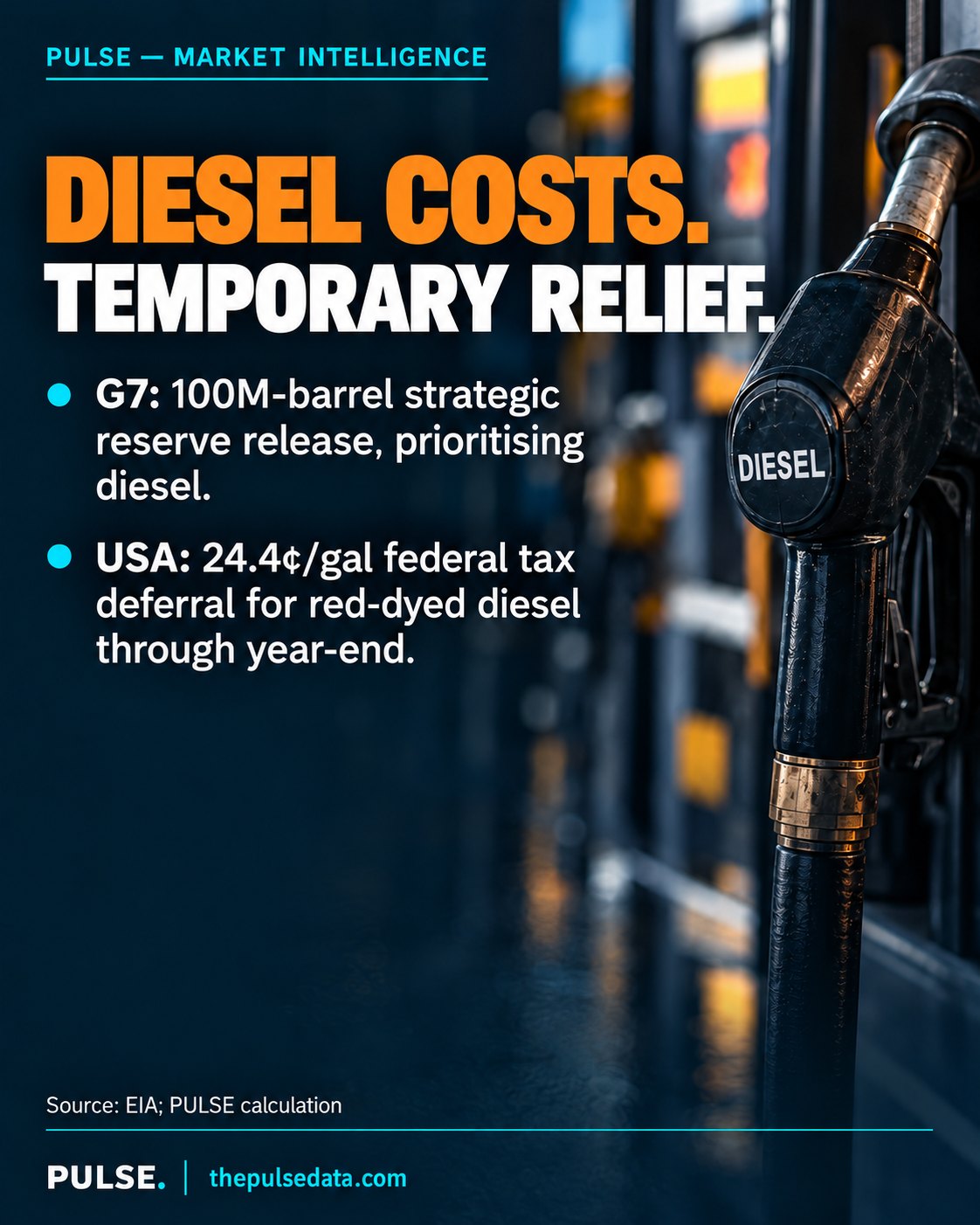
The US executive order of 5 October set out temporary relief involving highway use of dyed diesel and the deferral of certain fuel-tax payments for the period through 31 December 2026, subject to implementation conditions.
Separately, G7 leaders committed to a coordinated release of 100 million barrels over four months, prioritising diesel in the initial phase. Their statement linked the release to fulfilment of existing March commitments.
These measures may ease near-term pressure. Neither announcement, by itself, establishes a lower diesel-cost baseline for the whole of 2027.
A tax-payment deferral changes when an obligation is paid; it does not automatically remove that obligation. A reserve release supplies fuel over a defined period; it does not establish a permanent increase in refinery output.
If an AI-generated forecast assumes a lasting saving, the budget owner needs to identify the evidence supporting that duration.
A calculation is not yet a forecast
The PULSE illustration subtracts $0.244 from a $6.53-per-gallon reference price, producing approximately $6.29 per gallon: a notional reduction of 3.7%.
The arithmetic is straightforward. Applying it to a purchasing budget requires additional judgments.
Does the relief apply to the fuel the business buys? Will any benefit reach the buyer in full? Is the effect a price saving, a cash-flow benefit or both? Does it continue into the budget period?
The illustration assumes full pass-through and explicitly states that tax deferral does not guarantee a pump-price reduction. Keeping those conditions visible prevents a scenario from becoming an unsupported commitment.
Build assumptions that can be checked
A defensible cost assumption needs a traceable starting point, a clear explanation of the expected movement and a defined period.
For diesel, that means recording the country, price date, units and tax basis. The forecast should then distinguish temporary measures from developments that could change supply and demand for longer.
Historical comparisons help test whether the proposed change is plausible. Purchasing terms establish when the business may experience it. Neither step should disappear simply because an AI tool supplied a confident answer.
Use scenarios to expose uncertainty
Rather than carrying one relief assumption across the entire year, a planning team can compare scenarios: relief expires as announced; support continues; or supply constraints offset its benefits.
Each scenario should state its conditions and translate the resulting price into expenditure using expected fuel consumption. The team can then identify which developments would justify revising the budget.
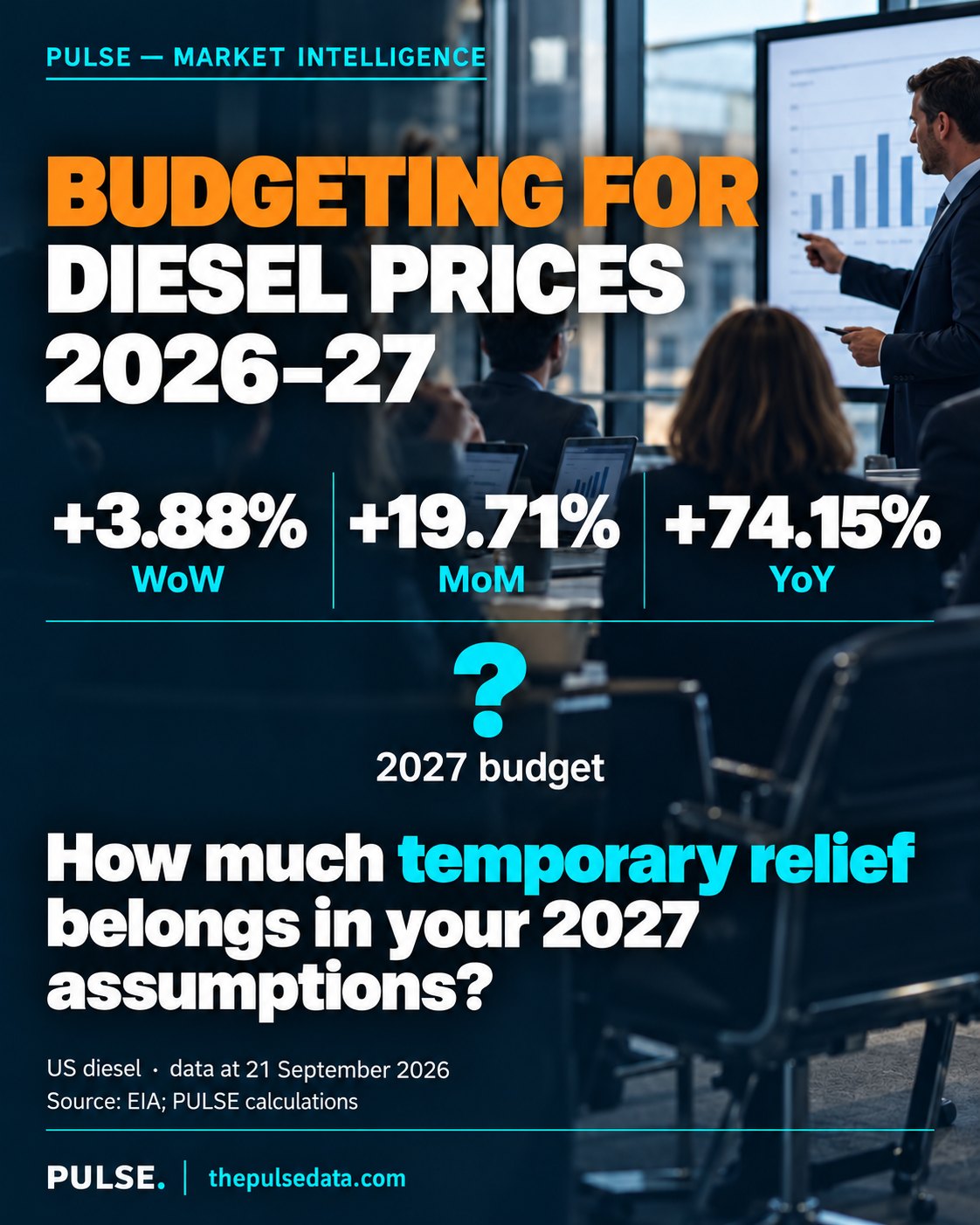
Keep AI useful and the budget accountable
AI can help organise evidence, compare scenarios and explain the sensitivity of a budget to changing inputs. The budget owner still needs to validate the sources and calculations, and decide which assumptions to adopt.
The useful question is:
Can we show where this assumption came from, why it applies to our business and what would make us change it?
PULSE supports that work with cost tracking and market context across fuel, materials, labour, energy and logistics, helping teams build assumptions they can defend.
Sources
- Sage research announcement, 6 July 2026
- US executive order, 5 October 2026
- G7 leaders’ statement, 2 October 2026
- Diesel illustration: supplied PULSE graphic, reference price dated 21 September 2026. This is an illustrative scenario, not a forecast.